
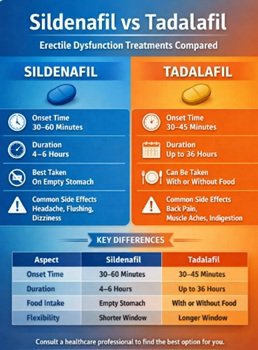
Sildenafil vs Tadalafil: Which Erectile Dysfunction Treatment Is Right for You?
Men experiencing Erectile Dysfunction often explore different treatment options to improve sexual performance and confidence. Two of the most commonly discussed medications are Sildenafil and Tadalafil. Both belong to a class of medicines known as PDE-5 inhibitors, which help improve blood flow to the penis during sexual stimulation.
Although these medications are widely used for treating erectile dysfunction, they differ in several important ways. Understanding the differences between sildenafil and tadalafil can help individuals make informed decisions in consultation with a healthcare professional.
This guide explains how each medication works, their duration of action, possible side effects, and key differences.
What Is Sildenafil?
Sildenafil is a medication commonly prescribed to treat erectile dysfunction. It works by relaxing blood vessels and increasing blood flow to certain areas of the body, particularly the penile tissues during sexual stimulation.
When taken before sexual activity, sildenafil may help men achieve and maintain an erection suitable for intercourse.
Key characteristics of Sildenafil
- Usually taken 30–60 minutes before sexual activity
- Effects typically last 4–6 hours
- Works best when taken on an empty stomach
- Requires sexual stimulation to be effective
Sildenafil has been widely studied and remains one of the most recognized treatments for erectile dysfunction.
What Is Tadalafil?
Tadalafil is another widely used medication for erectile dysfunction. Like sildenafil, it improves blood circulation to the penis by relaxing blood vessels.
However, tadalafil is known for its longer duration of action, which is why it is sometimes referred to as the “weekend pill.”
Key characteristics of Tadalafil
- Usually taken 30–45 minutes before activity
- Effects may last up to 36 hours
- Can be taken with or without food
- May allow more flexibility for sexual activity timing
Because of its extended duration, tadalafil may offer greater spontaneity for some couples.
Key Differences Between Sildenafil and Tadalafil
Although both medications treat erectile dysfunction, they differ in onset time, duration, and lifestyle flexibility.
| Feature | Sildenafil | Tadalafil |
| Onset time | 30–60 minutes | 30–45 minutes |
| Duration | 4–6 hours | Up to 36 hours |
| Food interaction | Best on empty stomach | Works with or without food |
| Flexibility | Shorter window | Longer window |
These differences may influence which medication is more suitable depending on personal preferences and lifestyle.
Which Medication Works Faster?
Both medications usually begin working within 30 to 60 minutes. However, the exact time may vary depending on individual metabolism, food intake, and overall health.
Some people report that sildenafil may act slightly faster in certain situations, especially when taken on an empty stomach. On the other hand, tadalafil provides a longer active period, allowing more flexibility.
Which One Lasts Longer?
One of the biggest differences between the two medications is their duration of action.
- Sildenafil generally remains active for 4–6 hours
- Tadalafil can remain effective for up to 36 hours
This extended duration is why tadalafil is often associated with the nickname “weekend pill.”
For individuals who prefer a longer window of opportunity, tadalafil may provide greater convenience.
Side Effects Comparison
Like many medications, both sildenafil and tadalafil may cause side effects in some individuals. Most effects are mild and temporary.
Common side effects of Sildenafil
- Headache
- Facial flushing
- Nasal congestion
- Mild dizziness
Common side effects of Tadalafil
- Headache
- Muscle aches
- Back pain
- Indigestion
The likelihood of side effects varies from person to person. Consulting a healthcare professional can help determine the safest option.
Reliable medical organizations such as NHS and Mayo Clinic provide detailed guidance on erectile dysfunction treatments and medication safety.
Which Medication Is Better?
There is no universal answer to whether sildenafil or tadalafil is better. The choice depends on individual needs and lifestyle.
Sildenafil may be suitable for individuals who prefer a shorter duration medication taken shortly before planned activity.
Tadalafil may be preferred by those who value longer flexibility and spontaneity.
A healthcare provider can evaluate medical history, current medications, and lifestyle factors before recommending an appropriate treatment.
Lifestyle Factors That Influence Erectile Health
While medications may help manage erectile dysfunction, lifestyle factors also play a major role in overall sexual health.
Healthy habits that may support erectile function include:
- Regular physical activity
- Balanced nutrition
- Managing stress levels
- Maintaining healthy body weight
- Limiting excessive alcohol consumption
Addressing underlying health conditions can also improve long-term outcomes.
When to Seek Medical Advice
Occasional erectile difficulties are common and may occur due to stress, fatigue, or temporary health factors. However, persistent symptoms may indicate an underlying condition.
A healthcare professional can evaluate possible causes and recommend appropriate treatment options.
Early consultation may help identify issues such as cardiovascular conditions, hormonal imbalance, or psychological factors that contribute to erectile dysfunction.
Conclusion
Both Sildenafil and Tadalafil are widely used medications for managing Erectile Dysfunction. While they work through similar mechanisms, their duration of action, flexibility, and potential side effects differ.
Understanding these differences can help individuals make informed decisions about their treatment options. Consulting a healthcare professional remains the safest way to determine which approach is appropriate for individual health needs.
Medical Disclaimer
This article is intended for educational and informational purposes only. It does not replace professional medical advice, diagnosis, or treatment. Individuals experiencing symptoms of erectile dysfunction should consult a qualified healthcare professional.



3 comments